

 Startups
  Creative agencies
  Onchain teams
  European businesses
  AI
AI  Software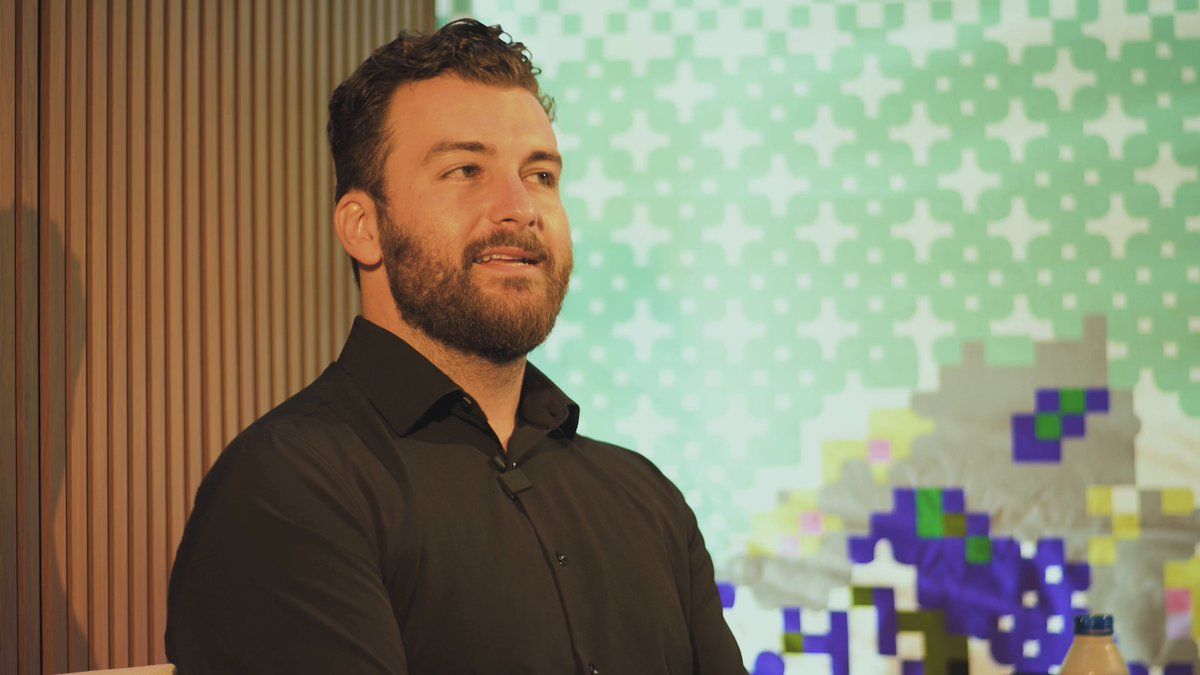
“It doesn't feel like a crypto product. It just works, it's beautiful, it's something that anyone can use.”Drew Rogers, Founder, Stabledash
Stabledash is a seven-person global media company covering stablecoins and modern finance. Despite paying contractors across multiple countries every week, founder Drew Rogers spends about an hour a week on financial operations and does not have a dedicated finance hire. It's the result of choosing infrastructure that matches how the business actually moves.
Drew came to this with more context than most. At Coinbase, where he led relationships and payments, USDC was a first-class asset. He watched large enterprises get onboarded to stablecoin-powered payment flows and understood early what the rails could do for businesses that needed to move money fast and globally. He saw it firsthand back in 2022. When he left to build Stabledash, he brought that background with him. Stabledash is a twice-weekly live show, a long-form podcast profiling founders, research reports, and sponsored content with the biggest infrastructure companies in the space. Drew co-hosts with Zach, who leads content and editorial. Drew runs everything else.
Media companies have unusual financial DNA
Like most media companies, revenue arrives when sponsorships close rather than on a fixed schedule, while contractors, vendors, and contributors need to be paid across multiple countries on no particular timeline. Speed and flexibility end up mattering more than traditional payroll workflows.
Most business banking was built around a predictable monthly cycle. A media company with a distributed global team operates on a different rhythm entirely. Inflows are event-driven. Outflows are immediate. Traditional accounts treat that as a series of exceptions. Altitude treats it as the default: a financial operating system that is always on, works across borders, and keeps treasury, payments, and accounting visibility in one place. Drew manages the whole operation himself, and it takes him about an hour a week.
Consolidating the financial stack into one account
Before Altitude, Stabledash ran its finances across two accounts: Dakota and Chase. As Dakota shifted its focus toward infrastructure, Chase picked up the operational weight, and it showed.
At one point Chase imposed a thousand-dollar daily withdrawal cap Drew had never set and could not remove. He spent hours on the phone, then logged in every day just to move his own money. It was not catastrophic. It was simply time he would rather have spent on the business.
Cross-border payments added a different kind of friction. Payments to contractors in other countries moved through correspondent banks, arriving days later minus fees neither side had agreed to upfront. For a business where contributors and partners are spread across multiple countries, that cost compounds.
One account. Treasury, payroll, vendor payments, accounting visibility.
Stripe processes Stabledash's sponsorship revenue and deposits it automatically into Altitude. From there, Drew pays the team, covers vendor invoices, handles contractor payments, and gives his accounting team direct visibility into all of it from the same account.
When Drew pays someone, they have the money within seconds.
“When you're sending money to people, it's really powerful to just send them a message and say, hey, I sent you the money. And then within seconds, they're like, yeah, I got it. That sense of finality is so powerful for a business that moves really fast like ours.”Drew Rogers, Founder, Stabledash
Stabledash's LLC is registered in the States, but their team members, contractors, and partners are distributed globally. Sponsors are global companies. Running through a traditional account would mean treating every international payment as a special case: wire fees, conversion friction, different timelines for different corridors. Altitude does not have those constraints baked in.
“Geographic limitations have never been a problem. It allows us to move at a pace we want to move, grow at a pace we want to grow.”Drew Rogers, Founder, Stabledash
Drew pays attention to how product teams treat their users. It is part of how he evaluates the companies Stabledash covers, and it is how he evaluates the tools he builds his own business on. When he wanted the ability to show the Altitude dashboard publicly without exposing his balance, he flagged it to the team. Three days later it was shipped.
“I love working with the Altitude team in terms of how well they've implemented feedback. It's been really obvious that the team really cares about getting better and improving the product.”Drew Rogers, Founder, Stabledash
A lean operation, running globally
“It doesn't feel like a crypto wallet or something that feels intimidating. It's something that anyone can use. I fully believe that to actually reach scale and get these types of products to companies and treasurers all around the world, they have to be designed like that. Altitude is one of the few products I've ever come across as a founder that actually works like that.”Drew Rogers, Founder, Stabledash
What media founders can learn from this
A media company's product is its content. Every hour spent reconciling two bank accounts, chasing payment confirmations, or navigating a bank's support line is an hour not spent booking a better guest, producing a tighter episode, or closing a sponsor that actually fits.
- Consolidate early. Two accounts means two sets of reconciliation, two mental models, two places things can go wrong. One account for treasury, payroll, and vendor payments keeps the operation out of the way.
- Match your infrastructure to your operating speed. A media business moves on deal timelines. When a sponsorship closes, the money needs to move. Settlement delays that seem minor in isolation compound across a full year of transactions.
- Treat product responsiveness as a signal. The financial tools a media company uses are active relationships. How fast a team ships feedback tells you whether they are building for the people using the product or for someone else.