

 Startups
 Creative agencies
 Onchain teams
 European businesses
 AI
 Software
Financial tools are becoming increasingly connected. Invoices can move between platforms, payments can settle in seconds, and more of the work that once required manual intervention can now happen automatically.
But as financial workflows become faster and more automated, an important question emerges: how can businesses trust the information moving between these systems?
Payment instructions often pass through multiple applications before money moves. Knowing where those instructions originated, whether they’ve been changed, and what has actually been verified is essential to making payments safely.
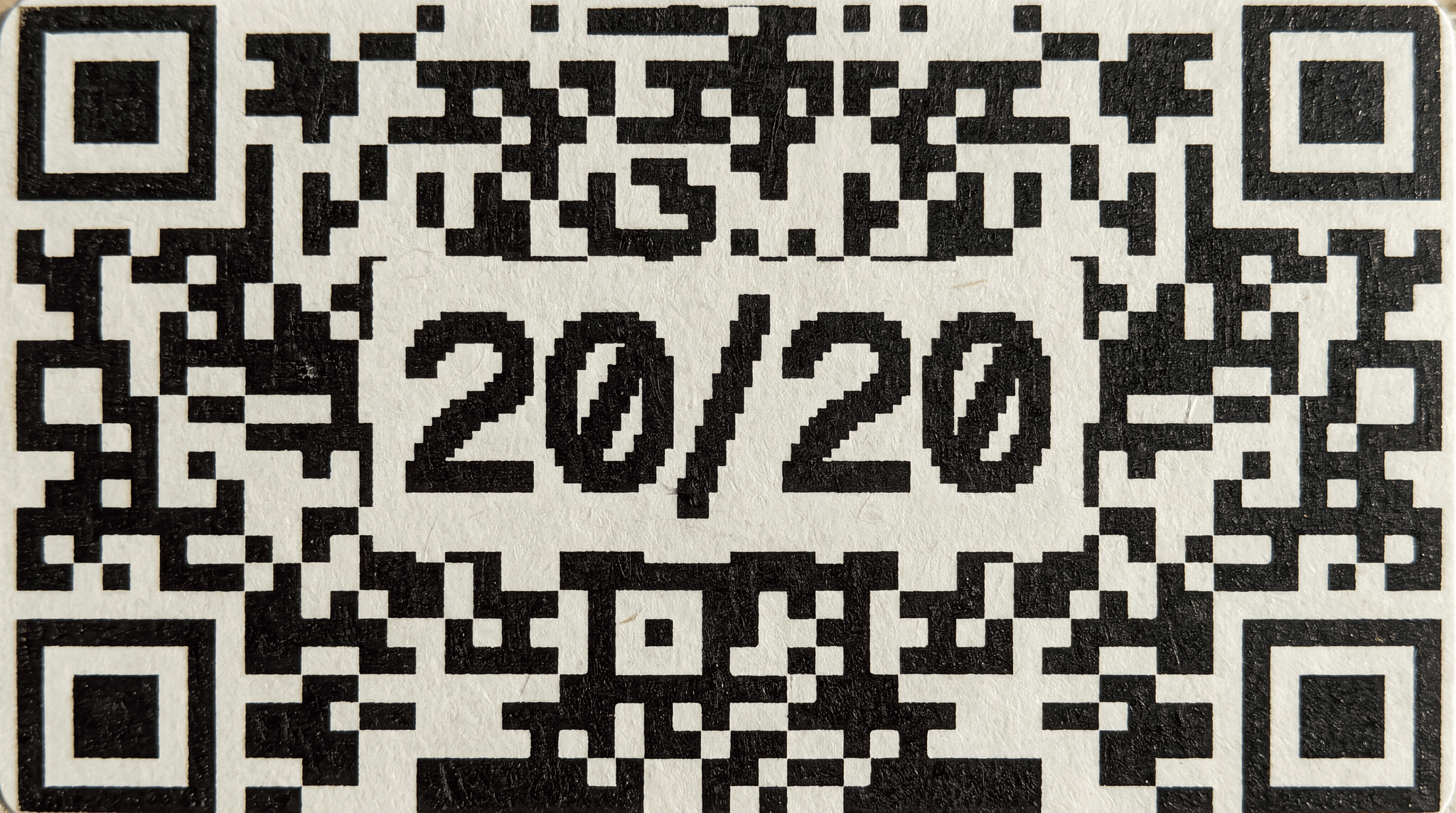
At Money20/20 USA, we’re joining other companies demonstrating ANSI X9.150, the QR payment standard published by the Accredited Standards Committee X9 (X9) earlier this year. It’s a common framework designed to make payment information more verifiable and interoperable across financial systems.
We’ll be exploring what that looks like in practice through Altitude Bill Pay.
Better payments start with better information
Consider what happens when a business receives an invoice.
Someone needs to identify the recipient, amount, and payment instructions, often from a PDF, and transfer that information into a separate payment system. Even when parts of the process are automated, applications still need a reliable way to interpret the information they’re given.
Structured payment requests address part of that challenge. Instead of relying on extracting and interpreting information from a document, compatible applications can retrieve payment details in a defined format.
Digital signatures add another layer of verification, allowing receiving applications to check the origin of a signed payment request and determine whether its contents have changed.
Together, these capabilities help reduce manual data entry while providing stronger assurances about the information used to prepare a payment.
ANSI X9.150 brings them into a common framework for QR-enabled payment requests and notifications, designed to work across participating platforms and payment methods. Payment requests under the standard are digitally signed using public key cryptography supported by the X9 Financial PKI.
Matera, whose North America General Manager chairs the X9.150 Work Group, has helped advance the standards effort behind X9.150, contributing to a framework that can support more connected payment experiences across the industry.
From invoice to payment, with verification built in
At Money20/20, we’ll demonstrate how X9.150 can work in an everyday business payment workflow, connecting invoicing, Altitude Bill Pay, and USDC settlement on Solana.
Here’s how the planned experience works:
- Receive an invoice. A business receives an invoice PDF containing an X9.150 QR code from a participating accounting platform.
- Retrieve and verify payment details. The payer uploads the invoice into Altitude Bill Pay. Altitude reads the QR code, retrieves the digitally signed payment request, and verifies its origin and integrity.
- Review and approve. The bill and recipient details are automatically populated, giving the payer an opportunity to review the information before authorizing the payment.
- Complete the payment. Once approved, the payment is completed in USDC on Solana.
- Update the invoice status. A payment notification returns to the invoicing application, allowing it to reflect the completed payment.
The result is a connected journey from invoice to payment status, with less manual handling of payment instructions and verification built into the process.
Importantly, verifying a signed payment request does not establish that the underlying invoice is legitimate or should be paid. The business still reviews the bill and decides whether to authorize the payment.
A common standard for a more connected financial system
The significance of X9.150 extends beyond any individual payment application.
Businesses increasingly use different providers for invoicing, accounting, payments, and treasury management. As these systems become more interconnected, the information passing between them needs to be understood and verified consistently.
A shared standard creates a common way for participating applications to exchange payment requests and communicate payment status, regardless of the underlying payment method. X9.150 is designed to work across rails, from real-time payment networks to ACH and emerging digital payment methods such as stablecoins.
For businesses, that can mean fewer manual steps, more consistent payment information, and clearer verification before money moves.
For financial applications, it creates opportunities to build interoperable workflows without requiring every provider to develop a separate approach to exchanging payment instructions.
Our Money20/20 demonstration is one example of what becomes possible when standardized payment information meets modern payment infrastructure.
Building trust into the next generation of payments
The next stage of financial automation will depend on more than how quickly applications can move money. It will also depend on how reliably they can exchange, interpret, and verify the information behind each transaction.
Standards like ANSI X9.150 help establish that foundation, making it possible for different systems to work together while maintaining essential checks before a payment is authorized.
At Altitude, we’re exploring how these capabilities can make everyday business payments more connected, efficient, and verifiable.
See the demo live at Money20/20 USA, October 18–21 in Las Vegas.
This demonstration is a proof of concept. Altitude is working toward general availability in the near future.